

Essential Strategies for Unlocking Athletic Potential
Let’s be totally honest for a second. Getting actually good at this game? Yeah, it never happens by sheer luck. Real, noticeable progress takes deliberate practice, structured footwork drills, targeted technical repetitions, and balanced match-play simulation. Just look at the folks at your local club who somehow jump two computer ratings in a single summer. They aren’t out there mindlessly bashing bucket after bucket of dead balls into the back curtain until their wrists hurt. Nope. Not a chance. They fix their court time by tying foundational mechanics straight to smart tactical execution.
Look, if you build your weekly routine around progressive athletic skill-building, mental focus, and tailored feedback, everything changes. Honestly, that’s the whole secret. Do that, and long-term player development pretty much takes care of itself—doesn’t matter if you’re seven or seventy, or what your NTRP card says right now. Stick to structured routines, and suddenly you can evaluate your game without guessing—while building adaptive strategies that actually hold up when you’re down break point in a tight third-set tiebreaker.
Why is Structured Practice Essential for Tennis Development?
Ever stand on the sideline, watching court three, and wonder why one player doubles their skill level in three short months. While another stays totally stuck hitting the same 50-mph baseline rally for five straight years? Sure, talent helps a bit, but it’s rarely the real story here. The way you structure your time on court dictates your athletic growth. Period. End of story.
When you finally commit to deliberate tennis training, every single swing gets an actual job to do. Structured practice builds deep muscle memory—the exact thing that lets your body pull off complex physical movements on pure autopilot during high-pressure match scenarios.
Hitting balls back and forth with zero clear target creates lazy habits. Sloppy ones, too. And man, those bad habits shatter the second real match pressure hits. Purposeful practice works completely differently. It forces you to hit precise court zones, tweak racquet angles on the fly, and clean up footwork patterns.
| Practice Focus | Unstructured Approach | Structured Training Program |
|---|---|---|
| Primary Goal | Hitting balls over the net aimlessly | Targeting specific court zones and spin depths |
| Footwork | Static positioning and lazy recovery | Dynamic split-steps and explosive direction changes |
| Feedback | Guessing errors after missed shots | Real-time technical adjustments from a professional |
| Progress | Unpredictable skill plateaus | Measurable, steady skill progression |
What Daily Habits Create Better On-Court Consistency?
Seriously, aren’t you sick of dumping easy, unforced errors straight into the bottom tape of the net? Time for a quick routine overhaul. Great players don’t just cross their fingers and pray for a good hitting day—they rely on disciplined preparation, solid balance, and clean footwork every single time they step past the gate.
Mastering a timed split-step prepares your body to explode in any direction—fast. Pair that up with quick recovery steps back to the center mark, and boom: you just bought the extra split second required to set up a clean stroke.
Try dropping target cones deep near the baselines next time you go out. It trains your eyes to judge depth and net clearance without second-guessing yourself when you’re stretched wide. The second you bring structured tennis training into your weekly regimen, you’ll spot immediate jumps in your spatial awareness and shot depth control.
- Set deep target cones near both baseline corners to build depth accuracy.
- Focus on consistent net clearance and balance during every hit.
- Execute a timed split-step before every opponent contact.
How Does Guided Instruction Accelerate Skill Acquisition?
Trying to fix a funky serve drop or a hitch in your backhand swing path using random social media clips? Total nightmare. Human biomechanics happen way too fast for an untrained eye to analyze properly during live points anyway.
Stepping onto the court with a professional tennis instructor gives you instant, real-time feedback to fix micro-flaws long before they freeze into permanent, ugly bad habits. Good professional instruction speeds up your learning curve by months while keeping you safe from nasty repetitive strain injuries like tennis elbow.
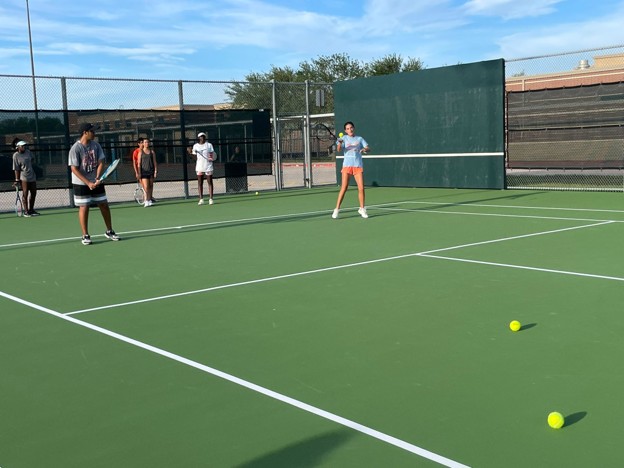
Having proper tennis instructor guidance makes it way easier to master subtle grip adjustments, fluid shoulder rotations, and efficient kinetic energy transfer on every single hit. Over at Katy Tennis Academy, coaches teach young players and adults core fundamentals through high-energy, dynamic sessions that keep people coming back week after week.
By offering structured classes and private lessons running from morning to evening, players get personal feedback tailored right to their level. That kind of attention builds real confidence, guarantees steady gains, and keeps the sport fun over the long haul.